As a supplier of Potassium Dihydrogen Phosphate (KH₂PO₄), I’ve witnessed firsthand the importance of understanding how temperature affects its solubility. This knowledge is not only crucial for the scientific community but also for industries that rely on this versatile chemical compound. In this blog post, I’ll delve into the science behind the relationship between temperature and the solubility of Potassium Dihydrogen Phosphate, exploring its implications for various applications. Potassium Dihydrogen Phosphate

Understanding Solubility
Before we dive into the effects of temperature, let’s first understand what solubility means. Solubility refers to the maximum amount of a solute that can dissolve in a given amount of solvent at a specific temperature and pressure to form a homogeneous solution. For Potassium Dihydrogen Phosphate, the solvent is typically water, and the solubility is often expressed in grams of solute per 100 grams of water (g/100g H₂O).
The Effect of Temperature on Solubility
The solubility of most solid solutes increases with an increase in temperature. This is because solubility is an endothermic process for many substances, meaning it requires energy to break the intermolecular forces holding the solute particles together and to allow them to interact with the solvent molecules. As the temperature rises, the kinetic energy of the molecules increases, providing the necessary energy for the dissolution process.
Potassium Dihydrogen Phosphate follows this general trend. As the temperature of the water increases, more KH₂PO₄ can dissolve in it. This relationship can be represented by a solubility curve, which plots the solubility of a substance against temperature. The solubility curve for Potassium Dihydrogen Phosphate shows a positive slope, indicating that its solubility increases with temperature.
Scientific Explanation
The increase in solubility with temperature can be explained by the principles of thermodynamics. When a solute dissolves in a solvent, two main processes occur: the separation of solute particles from each other and the interaction of solute particles with solvent molecules. The first process requires energy (endothermic), while the second process releases energy (exothermic).
For Potassium Dihydrogen Phosphate, the endothermic process of breaking the ionic bonds in the solid is more significant than the exothermic process of solvation. As the temperature increases, the additional thermal energy overcomes the energy required to break the ionic bonds, allowing more ions to enter the solution. This results in an increase in solubility.
Practical Implications
Understanding the effect of temperature on the solubility of Potassium Dihydrogen Phosphate has several practical implications for different industries:
Agriculture
In agriculture, Potassium Dihydrogen Phosphate is commonly used as a fertilizer. It provides essential nutrients like potassium and phosphorus to plants. Farmers and agriculturalists need to know the solubility of KH₂PO₄ at different temperatures to prepare the right concentration of fertilizer solutions. For example, in warmer climates, they can dissolve more KH₂PO₄ in water to create a more concentrated fertilizer solution, which can be more efficient in delivering nutrients to the plants.
Food Industry
In the food industry, Potassium Dihydrogen Phosphate is used as an acidity regulator, emulsifier, and nutrient supplement. Food manufacturers need to adjust the solubility of KH₂PO₄ according to the temperature conditions during food processing. For instance, in a hot processing environment, they can take advantage of the increased solubility to ensure uniform distribution of the compound in the food product.
Laboratory and Research
In laboratory settings, scientists and researchers often use Potassium Dihydrogen Phosphate in various experiments. They need to accurately control the concentration of KH₂PO₄ solutions, which requires a good understanding of its solubility at different temperatures. This ensures the reproducibility and accuracy of experimental results.
Experimental Evidence
Numerous experiments have been conducted to study the solubility of Potassium Dihydrogen Phosphate at different temperatures. One common method involves preparing a saturated solution of KH₂PO₄ at a specific temperature by adding excess solute to water and stirring until no more solute can dissolve. The excess solid is then filtered out, and the amount of dissolved solute is determined by evaporating the solvent and weighing the remaining solid.
By repeating this process at different temperatures, a solubility curve can be constructed. Experimental data consistently show that the solubility of Potassium Dihydrogen Phosphate increases with temperature. For example, at 0°C, the solubility of KH₂PO₄ in water is approximately 14.8 g/100g H₂O, while at 100°C, it increases to about 95.3 g/100g H₂O.
Factors Affecting Solubility Besides Temperature
While temperature is the primary factor affecting the solubility of Potassium Dihydrogen Phosphate, other factors can also have an impact:
Pressure
For most solid solutes in liquid solvents, pressure has a negligible effect on solubility. However, in some extreme cases or in systems where gas solubility is involved, pressure can play a role. Since Potassium Dihydrogen Phosphate is a solid and is usually dissolved in water, pressure changes within normal ranges do not significantly affect its solubility.
Presence of Other Substances
The presence of other substances in the solution can either increase or decrease the solubility of Potassium Dihydrogen Phosphate. For example, if there are other salts in the solution that share common ions with KH₂PO₄, the solubility may decrease due to the common ion effect. On the other hand, some substances may act as complexing agents and increase the solubility by forming soluble complexes with the solute.
Conclusion
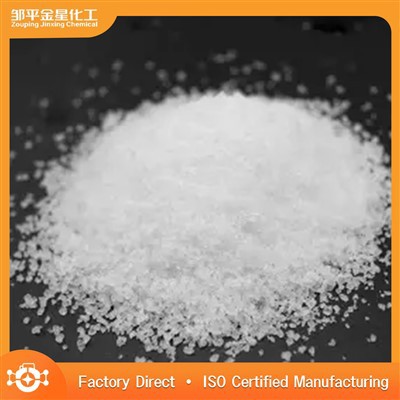
In conclusion, temperature has a significant impact on the solubility of Potassium Dihydrogen Phosphate. As the temperature increases, the solubility of KH₂PO₄ in water also increases, which is in line with the general trend for most solid solutes. This relationship has important practical implications for various industries, including agriculture, food, and laboratory research.
Copper(II) Sulfate As a supplier of Potassium Dihydrogen Phosphate, I understand the importance of providing high – quality products and accurate information about their properties. Whether you are an agriculturalist looking for the best fertilizer, a food manufacturer in need of a reliable additive, or a researcher conducting experiments, I can offer you top – notch Potassium Dihydrogen Phosphate products. If you are interested in purchasing Potassium Dihydrogen Phosphate or have any questions about its solubility or other properties, please feel free to contact me for a procurement discussion.
References
- Atkins, P. W., & de Paula, J. (2006). Physical Chemistry. Oxford University Press.
- Chang, R. (2008). Chemistry. McGraw – Hill Higher Education.
Zouping Jinxing Chemical Co., Ltd.
Zouping Jinxing Chemical Co., Ltd. is one of the most reliable potassium dihydrogen phosphate manufacturers and suppliers in China, also supports customized service with low price. Please feel free to wholesale cheap potassium dihydrogen phosphate in stock here from our factory. For free sample, contact us now.
Address: Guojia Village, Jiaoqiao Town, Binzhou City, Shandong Province, China
E-mail: admin@zpjxhg.com.cn
WebSite: https://www.zpjinxing.com/
