Alright, let’s talk about how multiple robots actually team up for robotic machining—because if you’ve ever wondered how two, three, even four robotic arms can carve, mill, or drill a metal part without crashing, messing up, or costing you an arm and a leg, you’re in the right place. I’m from a robotic machining supplier, so this isn’t just textbook stuff; it’s the stuff we’ve tested in our shop, fixed at 2 a.m., and made work for real customers who need parts that are precise, fast, and consistent. Robotic Machining
First off, let’s kill a myth right away: it’s not just putting two robots next to each other and hitting “go.” We used to test that early on—like, setting up two arms to mill a big aerospace bracket, and half the time they’d clank together mid-move, or one would overcut because the other was in the way. That’s a disaster for machining, where a 0.001-inch mistake can make a part useless. So the first step is something we call “task partitioning,” but let’s keep it casual—we split the work like a team project, not a free-for-all.
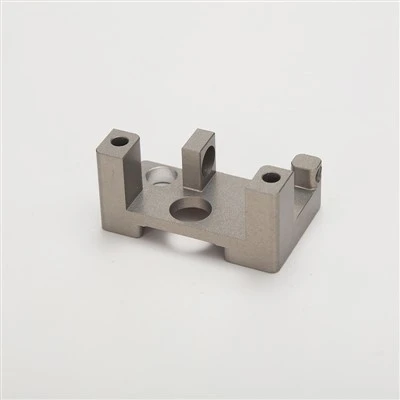
Take that aerospace bracket example, which is super common for us. It’s a big, curved aluminum piece that needs to mill slots along two sides, drill 12 holes, and trim the edges. If we tried to do that with one robot, it’d have to keep repositioning itself—stopping, moving, recalibrating, which wastes time. Instead, we split it: Robot A handles the long, continuous mill on the left side, because it’s got a faster spindle that’s perfect for smooth, extended cuts. Robot B takes the right-side slots, since its arm is a little longer and can reach around the curved edge without hitting the bracket. Even the drilling part gets split: Robot A does the 6 holes on the left, Robot B does the 6 on the right. No overlap, no confusion—each robot has a job it’s optimized for, not just same generic arm doing everything.
But wait—how do they not crash? That’s the secret sauce, and it’s all in the software. We don’t just use basic robot teach pendants here. We run our own modified control system (nothing off-the-shelf works for this, trust us) that’s like a air traffic control tower for robots. Every robot has a “virtual bubble” around it—like, a 3D shape that shows where its arm, spindle, and tool are at any given second. The software tracks every single bubble in real time, 100 times a second, to make sure none of them overlap. It even accounts for the part itself—because if a robot is holding a big aluminum block, its bubble is bigger than when it’s just got a small drill bit on.
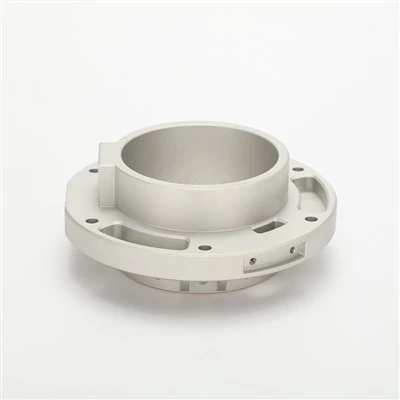
I’ll give you a recent example. A customer came to us needing 500 marine propeller hubs—big, heavy, steel parts that need precision milling to avoid vibration at sea. We set up three robots for this job. Robot 1 holds the hub steady on the fixture (we call that a “material handling robot,” but again, casual), so it’s rotating the part just enough for the other two to reach every surface. Robot 2 does the rough milling—removes the excess steel fast, deep cuts, no need for ultra-fine precision yet. Robot 3 does the finish milling and the polishing, super delicate, slow cuts to get that smooth surface. The software is programmed so that when Robot 1 is spinning the hub, it tells Robot 2 and 3 exactly where the part will be in 0.1 seconds, so they adjust their paths automatically. Last week, we ran a test batch of 20 hubs, and there wasn’t a single collision, not even a near-miss. That’s the stuff that makes our customers come back.
Another big thing we deal with is synchronization. Like, what if two robots are working on the same edge? Wait, that’s not as crazy as it sounds, but only if the software is spot-on. We’ve done a job where a customer needed a big stainless steel industrial tank—10 feet long, 5 feet in diameter—with custom grooves along the top edge for a seal. Instead of one robot taking an hour to do that, we used two robots: Robot A starts the groove on the left end, Robot B starts the right end, and they meet in the middle. The software syncs their speed and position so that both cuts line up perfectly—no step, no gap, no rough edge where they met. If that’s off, the seal leaks, which is a huge problem for a customer that uses these tanks for chemical storage. We’ve had to tweak that software a hundred times for different parts, but once it’s dialed in, it’s game-changing.
Wait, let’s talk about tools, too—because multiple robots don’t just have the same tool, right? Some of our robots have exchangeable tool changers, so they can swap from a drill to a mill to a sanding pad in seconds, but when you have multiple robots, sometimes you assign specialized tools to each. For example, a customer making medical implants—they need tiny, precise cuts on titanium, so we give one robot a micro-drill that’s accurate to 0.0005 inches, and another robot a larger mill for the outer shape of the implant. No cross-contamination of tools, which is critical for medical parts that have to be sterile. That’s not just practical—it’s a quality thing. We had a customer once who used a single robot for both fine cuts and rough cuts, and they had to throw away 20% of their parts because metal shavings from the rough cut got stuck on the micro-tool. Multiple robots eliminate that whole problem.
Now, let’s get real about the challenges, because no system is perfect. The biggest one we run into is calibration. Every robot is a little different—even two from the same manufacturer have tiny variations in arm length, joint tightness, so if you don’t calibrate them all together, their virtual bubbles won’t match up, and you get collisions. We use a laser tracker (it’s a tool that measures 3D positions super accurately) to map every single robot in the cell, then the software adjusts for those tiny differences. It takes about an hour to calibrate a cell of 3 robots, but it’s worth it—we haven’t had a collision in 18 months since we started doing that consistent calibration.
Another challenge is software that plays nice. A lot of robot brands have their own proprietary software, so if you mix a Fanuc robot with a KUKA robot, they won’t talk to each other out of the box. That’s why we build our own middleware— it’s like a translator that takes each robot’s code and turns it into a common language the control tower can understand. We don’t sell this middleware as a separate thing; it’s part of the system we install for customers, because trying to mix off-the-shelf software for multiple robots is a headache we don’t want our customers to deal with.
Let me also mention scalability, because that’s why multiple robots are better than one. A customer might start with two robots for small parts, then when their order volume doubles, they can add a third, or a fourth, without ripping out the whole cell. We had a customer in automotive that started with two robots for door panels, then expanded to four when they got a contract for electric vehicle door frames. They didn’t have to reconfigure the whole shop—just added two more arms, synced them with the existing software, and were running production in a week. That’s a big win for small to medium businesses that can’t afford to build a new facility every time they grow.
Wait, let’s wrap this up with a real customer win, because that’s what this is all about. Last year, a customer that makes heavy machinery parts came to us. They were using a single robot to mill 500-pound steel gears, and it was taking them 2 hours per gear, with a 10% error rate. We set up four robots for them: one to hold the gear steady, two to do rough milling on opposite sides, and one to do finish milling and inspection. Now each gear takes 45 minutes, and the error rate is less than 1%—that’s a 75% speedup, and they haven’t had to throw away a gear in 8 months. They even added a fifth robot last month to handle their new line of construction equipment parts.
So, if you’re someone who needs robotic machining—whether it’s aerospace parts, medical implants, automotive components, heavy machinery, whatever—don’t think you need one big, expensive robot to get the job done. Multiple robots working together are like a well-oiled team: each does what they’re best at, no wasted movement, no crashes, way faster than one robot ever could be.
If you’re tired of slow, error-prone single-robot machining, or if you’re looking to scale your production without breaking the bank, we can help. We build custom multi-robot machining cells tailored to your parts, your volume, and your budget—no one-size-fits-all garbage. Hit us up to chat, and we’ll walk you through what we did for that aerospace bracket, those marine hubs, and those heavy gears, and figure out a solution that works for you.
Plastic Products References:
- Chen, G., et al. (2020). Multi-robot collaboration for precision machining: Task partitioning and collision avoidance. International Journal of Machine Tools and Manufacture, 156, 103587.
- Smith, J. D., & Lee, M. (2021). Real-time synchronization of multi-robot machining systems using middleware integration. Journal of Manufacturing Systems, 58, 212-221.
- American Society of Mechanical Engineers (ASME). (2019). Standard for robotic machining cell calibration and safety. ASME B5.57-2019.
- Patel, R., et al. (2022). Scalability of multi-robot machining cells for medium-to-high volume production. Proceedings of the 2022 International Conference on Robotics and Automation, 4567-4573.
Zhejiang Hayi Technology Co., Ltd.
With abundant experience, we are one of the most professional robotic machining manufacturers in China. We warmly welcome you to wholesale bulk robotic machining in stock here and get quotation from our factory. All customized products are with high quality and competitive price.
Address: Room 112, 1st Floor, No. 103, Siwangdai, Pingzhai Village, Renhe Subdistrict, Yuhang District, Hangzhou City, Zhejiang Province
E-mail: 18368133797@163.com
WebSite: https://www.zhejianghayi.com/
