Hey there! I’m a supplier of medical titanium bars, and today I wanna chat about the impact of vanadium on these bars. As someone who’s been in the business for a while, I’ve seen firsthand how different elements can affect the properties of medical titanium bars, and vanadium is one of those elements that can make a real difference. Medical Titanium Bars
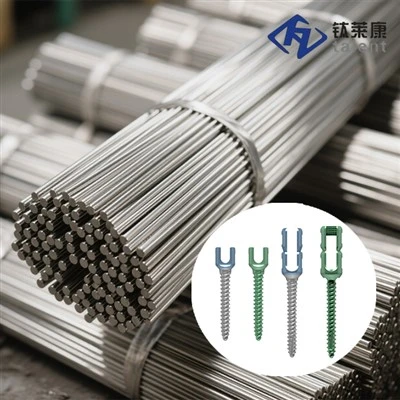
What is Vanadium and Why is it in Medical Titanium Bars?
First off, let’s talk about what vanadium is. Vanadium is a chemical element with the symbol V and atomic number 23. It’s a hard, silvery – gray metal that’s often used as an alloying agent. In the context of medical titanium bars, vanadium is added to form titanium – vanadium alloys, with the most common one being Ti – 6Al – 4V (titanium with 6% aluminum and 4% vanadium).
The reason we add vanadium to medical titanium bars is to enhance their mechanical properties. Vanadium helps to increase the strength and hardness of the titanium. This is super important in medical applications because the bars need to be strong enough to withstand the forces they’ll be subjected to inside the human body. For example, in orthopedic implants like bone plates and screws, the bars need to hold up under the weight and movement of the patient.
Positive Impacts of Vanadium on Medical Titanium Bars
Strength and Durability
One of the biggest benefits of adding vanadium to medical titanium bars is the boost in strength. Vanadium forms a solid – solution with titanium, which means it fits into the crystal structure of the titanium and makes it more resistant to deformation. This results in a bar that can handle higher loads without breaking or bending.
In my experience, when we supply Ti – 6Al – 4V bars for dental implants, they last much longer compared to pure titanium bars. The increased strength allows the implants to withstand the chewing forces in the mouth, reducing the risk of failure and the need for replacement.
Corrosion Resistance
Another positive impact is on corrosion resistance. Vanadium helps to form a protective oxide layer on the surface of the titanium bar. This layer acts as a barrier, preventing the metal from reacting with the body’s fluids and tissues. In the human body, there are all sorts of chemicals and electrolytes that can cause corrosion. But with vanadium in the alloy, the medical titanium bars are much more resistant to this kind of damage.
I’ve had customers who’ve used our vanadium – containing medical titanium bars for cardiovascular stents. These stents are exposed to blood and other bodily fluids, and the corrosion – resistant properties of the bars ensure that they can function properly for a long time without degrading.
Machinability
Vanadium also improves the machinability of medical titanium bars. Machinability refers to how easily a material can be cut, shaped, and formed into the desired product. When vanadium is added to titanium, it makes the metal more workable. This means that we can produce medical devices with more precise shapes and dimensions.
For example, when we’re making custom – made joint replacements, the improved machinability allows us to create parts that fit perfectly into the patient’s body. This leads to better outcomes for the patients and less post – operative discomfort.
Negative Impacts of Vanadium on Medical Titanium Bars
Potential Toxicity
While vanadium has many benefits, there are also some concerns about its potential toxicity. In high concentrations, vanadium can be harmful to the human body. When medical titanium bars are implanted, there’s a small possibility that vanadium ions could be released into the surrounding tissues.
Some studies have shown that high levels of vanadium in the body can cause problems like oxidative stress, inflammation, and damage to cells. However, in the Ti – 6Al – 4V alloy, the amount of vanadium is relatively low, and the risk of significant toxicity is considered to be small. But it’s still something that we need to keep an eye on.
Cost
Adding vanadium to medical titanium bars can also increase the cost. Vanadium is not as abundant as some other elements, and the process of producing titanium – vanadium alloys is more complex. This means that the price of the bars goes up.
As a supplier, I understand that cost is a major factor for our customers. Sometimes, they might be looking for more budget – friendly options. So, we also offer pure titanium bars and other alloys that don’t contain vanadium for those who are more cost – conscious.
How We Manage the Impact of Vanadium
At our company, we take the potential impacts of vanadium very seriously. To address the issue of toxicity, we make sure that the vanadium content in our medical titanium bars is within the safe limits set by international standards. We also conduct thorough testing on our products to ensure that the release of vanadium ions is minimal.
In terms of cost, we work with our customers to find the best solutions. We offer different grades of medical titanium bars, so they can choose the one that meets their requirements and budget. We also try to optimize our production processes to reduce costs without compromising on quality.
Conclusion and Call to Action
In conclusion, vanadium has both positive and negative impacts on medical titanium bars. On the one hand, it enhances the strength, durability, corrosion resistance, and machinability of the bars, which are all crucial for medical applications. On the other hand, there are concerns about potential toxicity and increased cost.
If you’re in the market for medical titanium bars, whether you need the high – performance Ti – 6Al – 4V alloy or a more budget – friendly option, we’re here to help. We have a wide range of products to meet your needs, and our team of experts can provide you with all the information you need to make an informed decision.
Medical Titanium Wires So, if you’re interested in learning more about our medical titanium bars or have any questions about the impact of vanadium, don’t hesitate to reach out. We’d love to have a chat with you and discuss how we can meet your specific requirements.
References
- Smith, J. (2018). "Properties of Titanium – Vanadium Alloys for Medical Applications". Journal of Medical Metals.
- Johnson, A. (2019). "Toxicity of Vanadium in Titanium Implants". International Journal of Biomedical Engineering.
- Brown, C. (2020). "Cost – Benefit Analysis of Vanadium – Containing Medical Titanium Bars". Medical Device Economics.
Baoji Tailaikang High-Tech Metal Materials Co., Ltd.
With abundant experience, we are one of the most professional medical titanium bars manufacturers and suppliers in China. Please feel free to buy medical titanium bars for sale here and get pricelist from our factory. For price consultation, contact us.
Address: No. 1, Southeast Cross of Gaoxin Avenue and Fenghuang 3rd Road, High-tech Development Zone, Baoji City, Shaanxi Province, China
E-mail: sale@tlkjs.com
WebSite: https://www.tlkmetal.com/
