Hey there! If you’ve ever stared at a super crisp, vivid custom patch on a hoodie, backpack, or even a work jacket and wondered how the heck those bold designs stay so sharp and don’t peel off after a dozen washes, you’re not alone. I’m Jake, part of the small team running the sublimation patch supply we’ve built over the last five years—every day I get emails from folks who think sublimation is some fancy, unheard-of magic, and honestly? It’s way simpler than it sounds, even if it feels like it works a little like wizardry. Let me break it down, no boring jargon, just the real scoop from someone who’s watched this process mess up (and nail it) hundreds of times. Sublimation Patches
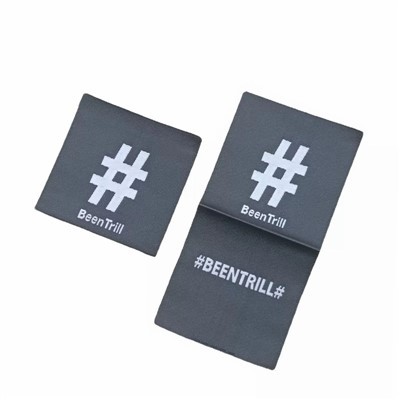
First off, let’s kill a myth right now: sublimation isn’t just “printing something hot.” I used to think that back when I started—like, you slap an inked sheet on a patch and blast it with a heat gun? Nah, that’s how you get lumpy, patch-shaped charcoal. It’s a whole chemical reaction, and the only reason it works is because of the materials we use for sublimation patches. You can’t do sublimation on regular cotton, right? Well, same goes for patches. The base we use for sublimation patches is 100% polyester, or sometimes a polyester blend that’s at least 90% poly—no exceptions. Here’s why: polyester is made of those tiny, plastic-like fibers that actually soften and open up when you heat them to a specific temp. The ink we use is special too—solid ink pellets that turn straight from solid to gas when heated, skipping the liquid phase entirely. That’s the “sublimation” part, by the way—phase change without melting into a goopy liquid. Cool, right?
Let’s walk through the step-by-step like I’m standing next to you in our workshop, pulling a fresh batch of patches off the heat press. First, the design. Most clients send us a PNG file, usually with a transparent background (though we can work with other formats too—no stress if you’re not a design pro). The big rule here: when we print the design, it’s printed in reverse. Wait, reverse? Why? Because we’re printing on a transfer sheet, right? When we press it, the ink gas goes through the transfer paper and embeds into the patch, so if we didn’t flip it, the design would come out backwards. I’ve messed that up more than once—first year, I printed a baseball team’s logo backwards and had to re-do 200 patches. Learned that lesson fast.
Next up, prepping the patch base. We lay a plain white polyester patch (usually with a thin fabric backing for stability, though sometimes clients want just the raw poly patch) onto the heat press mat. Then we lay the reversed transfer sheet on top, making sure there’s no lumps or gaps—if there’s a tiny bubble between the transfer and the patch, that spot won’t get ink, and you’ll have a white spot where your logo should be. Trust me, I’ve seen that too. Some guys use expensive heat tape to hold the transfer down, but we use cheap masking tape—it works just as well, as long as you press the edges tight.
Now the heat part, which is the make-or-break step. This isn’t just turning the press up to max and holding it there. Our heat presses are set to 400 degrees Fahrenheit, and we press for 50 seconds, with medium pressure—just enough so the transfer sheet is squished tight to the patch, not so hard it squirts ink everywhere. Here’s the chemical magic part: when the patch hits 400 degrees, those tiny polyester fibers start to swell and open up like little tiny doors. The sublimation ink, which starts as a solid on the transfer sheet, gets heated right at the same time to its sublimation temp—so it skips being a liquid, turns straight into gas, and slips right into those open fiber doors. Once we take the patch off the press, it cools down fast, and those polyester fibers snap shut, trapping the ink permanently inside. That’s why it doesn’t peel! It’s not sitting on top of the patch like a vinyl sticker—its part of the patch itself.
Wait, hold on—what about the edges? Sometimes people ask why sublimation patches don’t have that thick, ridged border that iron-on patches have. That’s another thing I love about the process. When you sublimate a patch, you can print the design all the way to the edge, so the design is actually on the patch’s fabric, not on top of a separate border. If you want a patch with a black edge, we can print a thin black line around the design, and that’s part of the fabric too, no extra stitching or plastic border needed. Though some clients do ask for stitched borders, and we can do that after sublimation—we just don’t use the plastic that those old iron-on patches used, which is way better for people with sensitive skin, too.
Let’s get real about the mistakes, though, because no process is perfect, and I want you to know what to watch for. If the heat is too low, or the time is too short, the fibers don’t open up all the way, so the ink doesn’t embed deep enough—it might look a little faded, or rub off after a few washes. If the heat is too high, or we press too long? The patch will get a little scorched, like a overheated plastic water bottle, and turn yellow or brown. We had a client send us a bad batch of white polyester base once that had a weird coating on it—when we pressed it, the ink didn’t stick at all, came off like a crayon drawing. So we test every roll of fabric we get, press a tiny sample first, to make sure it works. Also, you can’t use cotton for sublimation patches—if we sublimate on a cotton patch, the cotton fibers burn, and the ink just sits on top, like ink on paper, and it rubs off immediately. That’s why I always tell clients: if you want a patch that lasts, stick to the polyester.
Another question I get all the time: how many washes do they last? I’ve had a test patch on my work jacket for three years now, washed it every couple of weeks, and it’s still as bright as the day I made it. No fading, no peeling, nothing. The ink is inside the fabric, so it’s not exposed to the same kind of wear that a top layer would get. Compare that to a regular embroidered patch, which is great but can fray, or a vinyl iron-on that peels after 5 washes—sublimation is way more durable, especially for things like backpacks, work gear, or kids’ clothes that get thrown around a lot.
Wait, what about the size of the patch? Can you make a tiny 1-inch logo or a big 12-inch back patch? Totally. The heat press we use is big enough for patches up to 15 inches wide, so we can do almost any size. The only limit is the design itself—tiny details, like small text, work great because the ink is so precise. We’ve done patches with 1mm font, no problem, as long as the design is high enough resolution. Blurry designs from low-res images? That’s when it gets fuzzy, but we always flag that before starting a job, so you don’t end up with a patch that looks pixelated.
Let me wrap this up before I ramble too much, because I know you’re here to get the real tea on how this works, not just a science lab report. Sublimation patches work because of a chemical phase change—solid ink turns to gas, gets embedded into swollen polyester fibers, then gets trapped when it cools. It’s not a sticker, it’s not embroidery, it’s the design literally part of the patch. The key parts are the right fabric (100% polyester), reversed printing, exact heat and time, and letting it cool properly.
If you’re looking to get custom sublimation patches made—whether it’s for your team, a brand, an event, whatever—hit us up for a chat. We can walk through your design, answer any questions you have, and give you a quote fast. No salesy nonsense, just real people making solid patches that last.
Patches References:
- Sublimation Technology: Fundamentals and Applications, Society of Dyers and Colourists, 2015
- Polyester Fiber Science and Processing, Textile Institute, 2020
- Dye Sublimation Printing for Textiles, International Journal of Fashion Technology and Textile Sciences, 2018
Kaishen Garment Accessory Co., Ltd.
As one of the most professional sublimation patches manufacturers and suppliers in China, we’re featured by quality products and low price. Please rest assured to wholesale bulk cheap sublimation patches from our factory. Contact us for customized service and free sample.
Address: No.1, Yangguang Road, Shanwu Village, Shijie Town, Dongguan City, Guangdong Province
E-mail: patch@shiujan.com
WebSite: https://www.kspatch.com/
