Hey there, if you’re shopping around for a CNC drilling machine, you’ve probably already realized there’s no one-size-fits-all price tag for these bad boys. As a CNC drilling machine supplier who’s been in the game for over a decade, I get it—nothing kills a project momentum faster than getting blindsided by a random quote that’s way over what you budgeted. Today, let’s break down exactly what you can expect to pay, no jargon, no hidden fine print, just the real numbers I pass along to every customer that hits me up. CNC Drilling Machine
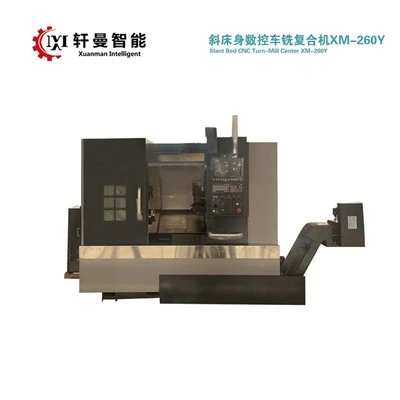
First off, let’s kill a myth right now. A lot of new buyers think “CNC drilling machine” is a single product. Nope. These things come in so many shapes, sizes, and specs that a tabletop unit for a small woodworking shop costs way different than a heavy-duty beast for drilling steel beams for skyscrapers. Let’s start at the low end, then work our way up, and I’ll walk you through what drives each price point so you know exactly what you’re paying for.
I’ve got a whole line of entry-level CNC drilling machines that clock in between $8,000 and $25,000. Wait, before you write that off as “cheap,” hear me out. These are perfect for small businesses, hobbyist shops, or startups that are just getting their feet wet. The entry-level models are compact—think tabletop or floor-standing with a small work envelope, like 24×36 inches max. They’re built for drilling soft materials: aluminum, wood, plastic, thin brass sheets. You won’t be drilling 2-inch thick steel plates here, and they usually have simpler controls—maybe a basic G-code interface instead of the fancy touchscreens with 3D design software. A lot of our regulars who own small fabrication shops love these for low-volume parts, prototype work, or small batch runs. I recently sold three of our $12,000 entry units to a guy who makes custom metal signs and dog tags—he was tired of his old manual drill press messing up holes, and these got him 10x faster with way more consistent results. The catch here? They don’t handle heavy, high-volume work, and you’ll outgrow ‘em fast if you’re taking on big commercial projects.
Next up is the mid-range, which is where most of our customers land—between $25,000 and $80,000. These are the workhorses, man. If you’ve got a mid-sized shop, doing medium-volume production, drilling thicker metals (up to 4 inches of steel, usually), or mixing drilling with tapping or countersinking, this is your sweet spot. The work envelopes here are bigger—like 4×8 feet or more, so you can drill large parts without repositioning. Controls are way better: full-color touchscreens, built-in G-code libraries, automatic tool changers (some models swap drill bits in 10 seconds, no waiting around), and some even have basic 3D design software loaded so you don’t have to buy extra CAD/CAM right away. We sell a lot of these to aerospace part manufacturers, automotive shops doing prototype components, and small structural steel fabricators. A client of mine in Texas picked up a $55,000 mid-range unit last year to drill brackets for pickup truck frames—he was producing 200 pieces a week with his old manual setup, and now he’s at 1,500 a week with way fewer errors. The mid-range also gives you more flexibility: you can upgrade it later, add a robotic arm for loading parts, or switch to different drill heads if your business grows. I always tell people, if you’re planning to scale in the next 2-3 years, skip the entry level and put a little extra toward mid-range—you’ll save a ton of money not having to replace it down the line.
Now for the heavy-duty industrial models, which start around $80,000 and go all the way up to $300,000+—no cap, honestly. These are the monsters for big companies doing high-volume, heavy-duty work. Think drilling 10-inch thick steel beams for skyscrapers, wind turbine components, or parts for military equipment. The work envelopes here are massive—some can handle parts 20 feet long or more. They have high-torque spindle motors, way faster drill speeds, precision linear rails that don’t wear out even after 24/7 operation, and full automation: integrated robotic part loaders, temperature control systems to keep drilling accurate over long runs, and even IoT connectivity so you can monitor performance from your office. A lot of these also come with custom modifications—like extra drill heads for multiple holes at once, or specialized coolant systems for high-heat drilling. The reason the upper end is so flexible? Some of our custom units for heavy infrastructure projects hit $250,000, because we add special features like laser alignment or the ability to drill into hardened steel. I had a big construction firm out of Chicago order a $220,000 custom CNC drilling machine last year to drill bridge steel—they needed it to meet strict federal tolerance standards, so we tweaked the spindle to get within 0.001 inch accuracy across every hole. These machines are built to last 15-20 years with minimal downtime, so the price tag is worth it for companies that need reliability for round-the-clock production.
Wait, but hold on—price isn’t just the base model number, right? There are a bunch of extra factors that will bump up (or even lower) what you pay, and I see so many buyers forget these and end up frustrated. Let’s talk add-ons first. A basic entry model might be $8,000, but if you add an automatic tool changer, that’s an extra $2,000. If you need a larger work envelope, that’s another $3,000. Coolant systems, dust collection (super important if you’re drilling wood or aluminum), extra drill bits, or a CAD/CAM license for designing parts—all that adds up. On the flip side, if you’re buying used, you can save 30-50% on a machine that’s only a year or two old, but I always warn people: get a full inspection. I’ve seen used machines where the spindle was worn out, and the seller hid it—you don’t want to end up with a $15,000 clunker that needs $10,000 in repairs. Also, location matters: shipping a 2,000-pound CNC drilling machine across the country can add $1,000 to $5,000 to your total, so if you can pick it up, that’s a big win. And don’t forget training—if no one on your team knows how to run the thing, you’re not getting your money’s worth. We offer on-site training for all our machines, and that’s included in the price for mid and heavy-range units, but it’s an extra fee for entry-level if you don’t want to do online tutorials.
Another big one: brand and support. Not all CNC drilling machines are made equal, and that shows in the price. A machine from a well-known brand with a 5-year warranty and 24/7 tech support will cost more than a no-name model from a factory I’ve never heard of, but here’s the thing: when your machine breaks at 2 a.m. during a big production run, you don’t want to wait 3 days for a part to ship from some random overseas factory. Last year, a customer who bought a cheap no-name machine called me panicking at 8 p.m. because his spindle died mid-week—we got him a replacement part the next morning, but he was down for 2 days. A customer who bought a mid-range model from us had a sensor issue last quarter, and our tech was at his shop by 10 a.m. the same day. That support is worth the extra few grand, in my book.
Let me also clear up a common question people ask: “Should I lease or buy?” A lot of small businesses opt for leasing, which can lower your monthly cost to like $300-$800 for entry units, $800-$2,500 for mid-range, depending on the term. But if you’re going to use the machine for more than 5 years, buying is usually cheaper in the long run. We work with a lot of small shops that start with a lease on an entry unit, then upgrade to a mid-range when they land their first big commercial contract.
Wait, before I wrap this up, let’s get real about what you should actually budget. If you’re a one-person shop doing custom small parts, plan for $8,000-$15,000 entry-level. If you have 3-5 people and are taking on small to medium batch projects, $30,000-$50,000 for mid-range. If you’re a factory with 10+ people doing high-volume heavy work, $100,000+ for heavy-duty or custom. I always tell people the worst mistake you can make is buying the cheapest machine you can find, only to realize it can’t handle what you need. And the second worst? Buying a machine that’s way too big for your current workload—you’re wasting money on features you’ll never use.

At the end of the day, the price of a CNC drilling machine isn’t a random number I pull out of thin air. It’s tied to what it can do, how long it will last, and how much it will help your business grow. If you’re ready to stop guessing and get a tailored quote for your specific project, just reach out. We don’t do one-size-fits-all quotes, so we’ll ask you about what materials you’re drilling, how many parts a week you need, and your budget, and give you a clear, honest number with no hidden fees. No sales pitches, no jargon, just straight answers.
Machining Center References:
- Modern Machine Shop. (2023). "CNC Drilling Machine Price Guide: 2023 Update." Gardner Business Media.
- Fabricators & Manufacturers Association International. (2022). "Cost Analysis of CNC Machining Equipment for Small to Medium Shops." FMA Publications.
- Star SU LLC. (2024). "Heavy-Duty CNC Drilling Solutions for Structural Steel and Wind Energy Applications." Star SU Technical Library.
- Thakur, D. S., & Singh, R. (2022). "Factors Influencing the Cost of CNC Machining Centres for Industrial Use." Journal of Manufacturing Processes, Vol. 81, pp. 452-460.
- US Small Business Administration. (2023). "Equipment Buying Guide: CNC Machinery for Small Manufacturing Businesses." SBA Office of Innovation and Technology.
Jiangsu Xuanman Intelligent Equipment Co., Ltd.
As one of the most professional CNC drilling machine manufacturers in China, we’re featured by quality products and low price. Please rest assured to buy discount CNC drilling machine made in China here from our factory. Customized orders are welcome.
Address: No.1-1, Weier Road, Jieji Equipment Manufacturing Industrial Park, Sihong County, Suqian City, Jiangsu Province, China
E-mail: jsxmzn@163.com
WebSite: https://www.xm-machs.com/
