As a seasoned supplier in the air separation unit (ASU) industry, I’ve witnessed firsthand the pivotal role these units play in various sectors, from healthcare to manufacturing. In this blog, I’ll delve into the main components of an air separation unit, explaining their functions and importance in the overall process. Air Separation Unit
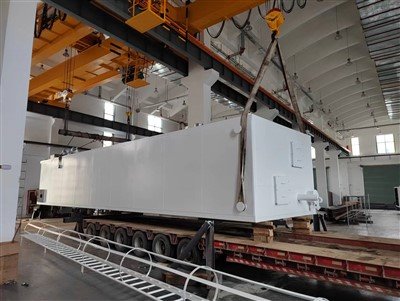
1. Air Compressor
The journey of air separation begins with the air compressor. This component is responsible for taking in ambient air and compressing it to a high pressure. The compression process is crucial as it increases the density of the air, making it easier to separate the different components later on.
There are different types of air compressors used in ASUs, such as reciprocating compressors and centrifugal compressors. Reciprocating compressors are known for their high pressure capabilities and are often used in smaller ASUs. Centrifugal compressors, on the other hand, are more suitable for large – scale operations due to their high flow rates.
The compressed air then moves on to the next stage, carrying with it all the components of the ambient air, including nitrogen, oxygen, argon, and trace amounts of other gases.
2. Air Pre – Treatment System
Once the air is compressed, it contains impurities such as dust, water vapor, carbon dioxide, and hydrocarbons. These impurities can cause problems in the subsequent separation process and damage the equipment. This is where the air pre – treatment system comes in.
The pre – treatment system typically consists of filters, coolers, and adsorbers. The filters remove solid particles from the compressed air, preventing them from entering the downstream components. The coolers reduce the temperature of the compressed air, which helps in the removal of water vapor. As the air cools, water condenses and can be drained out.
Adsorbers are used to remove carbon dioxide and hydrocarbons. They work by adsorbing these impurities onto a solid adsorbent material. Molecular sieves are commonly used adsorbents in ASUs. This pre – treatment step is essential to ensure the purity of the final products and the smooth operation of the ASU.
3. Heat Exchanger
The heat exchanger is a critical component in an ASU. Its main function is to cool the pre – treated compressed air to cryogenic temperatures. Cryogenic temperatures are extremely low temperatures, typically below – 150°C, which are necessary for the separation of air components.
The heat exchanger operates on the principle of counter – current flow. The incoming pre – treated air is cooled by the cold product gases that are leaving the separation column. This heat exchange process is highly efficient and helps in conserving energy. By using the cold energy of the product gases, the heat exchanger reduces the amount of external cooling required, making the ASU more energy – efficient.
4. Distillation Column
The distillation column is the heart of the air separation unit. It is where the actual separation of air components takes place. The column is based on the principle of fractional distillation, which takes advantage of the different boiling points of the air components.
Nitrogen has a boiling point of – 195.8°C, oxygen has a boiling point of – 183°C, and argon has a boiling point of – 185.8°C. When the cooled air enters the distillation column, it is in a liquid – vapor state. As the mixture rises through the column, the components with lower boiling points (such as nitrogen) vaporize first and are collected at the top of the column. The components with higher boiling points (such as oxygen) remain in the liquid state and are collected at the bottom.
There are usually two types of distillation columns in an ASU: the high – pressure column and the low – pressure column. The high – pressure column operates at a higher pressure and is used to separate nitrogen from the air mixture. The low – pressure column further refines the separation, producing high – purity oxygen and nitrogen products.
5. Liquid Storage Tanks
After the separation process, the produced oxygen, nitrogen, and argon are stored in liquid storage tanks. These tanks are designed to maintain the cryogenic temperatures of the liquids and prevent evaporation.
Liquid storage is beneficial as it allows for the storage of large quantities of the gases in a relatively small space. It also provides a buffer for the supply of the gases, ensuring a continuous and reliable source of product. The stored liquids can be vaporized when needed and delivered to the end – users.
6. Control System
The control system is the brain of the air separation unit. It monitors and controls all the components of the ASU to ensure optimal operation. The control system uses sensors to measure various parameters such as pressure, temperature, flow rate, and purity of the gases.
Based on the data collected from the sensors, the control system adjusts the operation of the components. For example, it can adjust the speed of the air compressor, the flow rate of the cooling water in the heat exchanger, and the operation of the valves in the distillation column. This ensures that the ASU operates at maximum efficiency and produces high – quality products.
7. Instrumentation and Monitoring
In addition to the control system, instrumentation and monitoring play a crucial role in the operation of an ASU. Various instruments are used to measure and monitor the performance of the different components.
Flow meters are used to measure the flow rate of the air, product gases, and cooling water. Pressure gauges are used to monitor the pressure in the compressors, heat exchangers, and distillation columns. Temperature sensors are used to measure the temperature at different points in the ASU.
These instruments provide real – time data that helps in detecting any potential problems or malfunctions in the ASU. By continuously monitoring the performance of the unit, operators can take proactive measures to ensure the smooth and safe operation of the ASU.
Why Choose Our Air Separation Units?
Our air separation units are designed with the latest technology and highest quality components. We understand the importance of reliability, efficiency, and product purity in the air separation process. Our units are built to meet the specific requirements of our customers, whether they are small – scale users or large industrial plants.
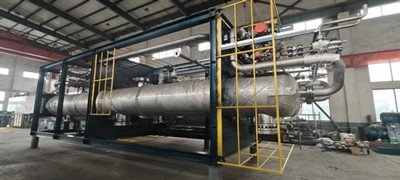
We have a team of experienced engineers and technicians who can provide comprehensive support, from installation and commissioning to maintenance and troubleshooting. Our commitment to customer satisfaction is unwavering, and we strive to provide the best possible solutions for your air separation needs.
Air Separation Unit If you are in the market for an air separation unit, we invite you to contact us for a detailed discussion. Our experts will be happy to answer your questions, provide you with a customized solution, and guide you through the procurement process.
References
- Kohl, A. L., & Nielsen, R. B. (1997). Gas Purification. Gulf Publishing Company.
- Perry, R. H., & Green, D. W. (1997). Perry’s Chemical Engineers’ Handbook. McGraw – Hill.
- Reay, D. A., & MacMichael, J. A. (1988). Heat Exchangers: Selection, Rating, and Thermal Design. Hemisphere Publishing Corporation.
Hanturbo Technology (Zhejiang) Co., Ltd.
Hanturbo Technology (Zhejiang) Co., Ltd. is one of the most professional air separation unit manufacturers and suppliers in China, also supports custom service. We warmly welcome you to buy discount air separation unit made in China here and get quotation from our factory. For price consultation, contact us.
Address: No.118, Wangluo Road, Deqing County, Huzhou City, Zhejiang Province, China.
E-mail: andyxu@hanturbo.com.cn
WebSite: https://www.hanturbo-gas.com/
