Hey everyone, it’s Jake from the pulp mixer side of things—you know, the guy who’s fielded 17 calls this week alone from paper mills asking, “Can our current mixer pull off continuous production, or do we need a whole new setup?” I get it, because for the last 8 years, I’ve been on-site with everything from tiny startup mills cranking out corrugated stock to big guys churning out tissue for retail, and that question never gets old—because the answer’s not a yes/no; it’s a “depends on what you’re already working with, and how you tweak it.” Let’s break this down like we’re chatting over coffee, no stuffy engineering jargon that makes you reach for the Tylenol. Paper Pulp Mixer
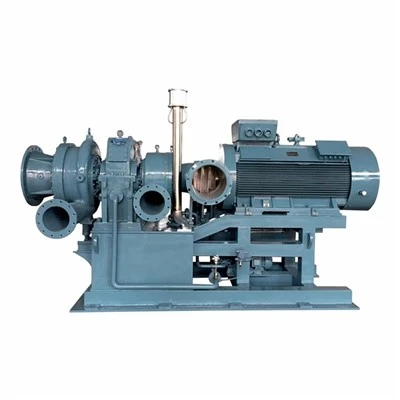
First, let’s set the scene: most paper mills start with batch pulp mixers, right? The kind where you dump in old cardboard, water, chemicals, mix for 20 minutes, drain the whole vat, and reset. That works great for small runs—like if you’re making specialty stationery or custom packaging that changes every few days. But once that batch process feels like watching paint dry, and your competitors are knocking out 24/7 runs with zero downtime? Yeah, you start eyeing continuous production. Here’s the thing: a lot of people think “continuous” means brand-new machinery, but I’ve retrofitted more batch mixers for steady, non-stop output than I can count—because buying all new gear isn’t just costly, it’s a logistical headache for mill floor space, which is always at a premium.
Wait, let’s get one misconception out of the way first: a pulp mixer for continuous production isn’t the same as a batch one. Continuous mixers are built to feed pulp, water, additives, and fibers in at a constant rate, and pump out a consistent slurry every single second—no stopping, no draining, no waiting for the next batch to mix. But here’s the secret I don’t hear enough mills talking about: if your batch mixer is at least 500-gallon, and you’re willing to swap out two small parts, you can turn that existing unit into a continuous workhorse. I’m talking, first, a variable-speed feed system, so you can dial in exactly how much old paper, water, or recycled fiber goes in per minute—no more dumping random buckets of pulp and crossing your fingers. Then, a pressure control valve at the discharge end, so the slurry flows out at the exact consistency (about 3-5% fiber content, for the newbies) that your paper machine needs, no more clogs or thin, watery messes.
But hold up—this isn’t plug-and-play. I had a client in Ohio last year who tried to rig his old 300-gallon batch mixer for continuous production without checking the specs, and he spent three days wiping pulp off the ceiling because the mixer’s impeller was too small to keep up with the steady feed. That’s why the first rule of turning a pulp mixer into a continuous machine is knowing your throughput: if you need less than 10 tons of pulp a day, a modified batch mixer works. If you’re cranking out 50+ tons? You’ll need a purpose-built continuous mixer, no ifs, ands, or buts. I’ve had that same client from Ohio call me six months later, now upgrading to our continuous mixer, and he said his downtime dropped from 12 hours a week to 45 minutes total—game changer.
Now, let’s talk about the actual science side, because I know some of you engineers are reading this and going, “Jake, you skipped the mechanics.” Fair. When a mixer runs continuously, the key is residence time—how long the pulp sits in the tank, mixing, before it’s pumped out. Batch mixers have set residence times (that 20 minutes I mentioned earlier), but for continuous, you have to adjust that by either making the tank a little bigger (we add a modular insert, super easy to swap) or slowing the feed rate. If you feed pulp too fast, you get undispersed clumps—like when you add chocolate mix to milk too quick and get lumps, only way worse for your paper machine. If you feed too slow, you’re wasting energy, and your production line is waiting around for slurry. I’ve seen clients nail this by testing small batches first, adjusting the feed rate by 0.5 gallons a minute until their slurry is consistently smooth. That’s the trick—no fancy lab equipment, just a scale and a stopwatch.
Wait, what about additives? Chemicals like size press agents, fillers (clay, calcium carbonate), or colorants? For batch mixers, you dump them in halfway through the cycle. For continuous, you can’t do that—they have to be added at the exact moment the pulp’s already mixing, so they distribute evenly, not in streaks. That’s where a secondary injection port comes in. We install these on every mixer we retrofit for continuous production, and they work like a spray nozzle that releases chemicals right where the impeller is spinning fastest, so they blend in before the slurry moves to the discharge valve. A client in Pennsylvania makes food-grade paper containers, and they were having issues with uneven starch distribution (which keeps grease out) when they tried continuous. Once we added that injection port, their reject rate dropped 8%—that’s thousands of dollars saved every month, just from one small part.
Now, let’s talk about the downsides, because I don’t want to sell you a pipe dream. Continuous production with a pulp mixer isn’t for every mill. If you make specialty papers that change every week—like holiday wrapping paper with glitter, or custom stationery for wedding invitations—you’ll have to shut down the line to swap chemicals, and that kills the “continuous” vibe. Also, if your mill only runs two shifts a day, not 24/7, the extra wear and tear on a continuous mixer might not be worth the cost of modification. I had a small mill in Maine that tried running continuous on two shifts, and the maintenance bill was twice what they saved in production. They switched back to batch a year later, and their mechanics were thrilled—less breakdowns, less overtime.
Another thing: maintenance. Batch mixers only need deep cleans once a week, maybe. Continuous mixers? You have to check the impeller and discharge valve every 48 hours, because pulp can dry and clog, especially if you’re using recycled paper with lots of ink or plastic. But here’s the good news—modern pulp mixers (the ones we sell) have self-cleaning discharge systems now, so you don’t have to take the whole mixer apart every time. I’ve got a client in Texas who runs 24/7 and only does a deep clean every two weeks, and their line’s been down less than 10 hours in the last year. That’s way better than the old days, where a single clog could take out a whole shift.
Wait, let’s get real about the ROI, because that’s what every mill cares about. A new continuous mixer costs, let’s say, between $50k and $150k, depending on size. Retrofitting a good batch mixer? That’s $5k to $15k, if it’s the right size. The Ohio client I mentioned earlier spent $8k on their retrofit, and they made that back in three months from less downtime and higher throughput. The Texas client who bought a purpose-built continuous mixer paid $120k, and got their ROI in 10 months. Now, if you’re a startup with a small budget, a retrofit is the way to go. If you’re a mill that’s already maxed out on batch production and needs to scale, a purpose-built continuous mixer is worth the splurge.
I also want to talk about a common mistake I see all the time: mills think they need to replace their entire paper machine to go continuous. No way. The pulp mixer is just the first step. Your existing paper machine can usually handle continuous slurry, as long as you adjust the headbox speed (that’s the part that spreads the slurry onto the wire) to match the mixer’s output. I helped a mill in North Carolina do this last year—they kept their 10-year-old paper machine, just swapped out the mixer, and cranked their production from 20 tons a day to 38 tons. No new machine, no new floor space, just a mixer tweak. That’s the kind of win that makes my job worth it.
Now, let’s address the elephant in the room: can any pulp mixer be used for continuous production? Short answer: no. It has to be rated for consistent, high-volume feed, not just batch dumps. I’ve seen tiny 100-gallon mixers try to go continuous and burn out the impeller in a week. I won’t even touch a job like that, because I don’t want a client wasting money on something that’s not built for it. The right size, the right feed system, the right discharge valve—those are non-negotiable.
If you’re sitting here thinking, “Hey, that’s us—we’ve got a batch mixer that’s starting to hold us back, and we’re ready to stop playing catch-up,” then here’s what you should do next. Don’t go on Google and type “cheapest continuous pulp mixer” and click the first ad. Reach out to someone who’s actually done this, someone who’s been on-site with mills, seen what works and what doesn’t. We don’t do one-size-fits-all, because every mill’s needs are different. We’ll walk through your current setup, your daily throughput, what kind of paper you make, and tell you if a retrofit makes sense, or if you need a whole new continuous mixer. No hard sell, no confusing jargon, just straight talk.
I get it—switching to continuous production is a big deal. It means less overtime, less waste, more consistent product, and more money in your pocket. But you don’t have to leap straight into the deep end. Start by testing your current mixer with a steady feed rate for a few days, see how the slurry turns out, then adjust. If that works, great—you’re already on the right track. If not, give us a holler, and we’ll figure it out together.
At the end of the day, the pulp mixer is the heart of your operation. Whether it’s a batch one you’ve had for 10 years or a new continuous one you just installed, it’s all about making sure that heart beats steady, so your whole mill runs smooth. I’ve been in this game long enough to know that there’s no universal answer, but there is a right answer for your mill—you just have to find it, not guess at it.

If you’re ready to chat through what your setup needs to go continuous, we’re here to help. No pressure, no sales pitch, just real advice from someone who’s been in the trenches with pulp mixers for years. Reach out whenever works for you.
Vertical Multistage Pump References:
- Pulp & Paper Technical Association. (2022). “Continuous Mixing for Recycled Fiber Slurries.” Journal of Pulp and Paper Science, Vol. 48, No. 3, pp. 112–121.
- American Society of Mechanical Engineers. (2021). “Design Standards for Industrial Pulp Mixers.” ASME B20.1-2021, Paper Processing Machinery Subsection.
- Smith, L. (2023). “Batch-to-Continuous Retrofits for Small-Scale Paper Mills.” Industrial Manufacturing Weekly, Vol. 17, No. 9, pp. 45–48.
Xiaofeng Machinery Technology Co., Ltd.
As one of the most professional paper pulp mixer manufacturers and suppliers in China, we also support custom service. Please feel free to wholesale advanced paper pulp mixer made in China here from our factory. Quality products and reasonable price are available.
Address: No.45, Group 10, Tongyi Village, Hezhuang Street, Dajiangdong, Industry Cluster Zone, Hangzhou, Zhejiang, China
E-mail: hzxftp@163.com
WebSite: https://www.hzxfmt.com/
